

Evelyn Nesbit
The Dawn of "It Girl" and the Trial of the Century

If I didn’t have such great taste I would be a hoarder. Instead I get to call myself a collector.
What is that I collect exactly? Well, it’s complicated… I have precious memories of sitting next to my parents on a warm summer night at a New England auction with a bidding paddle in my hand and absolutely no money in my pocket. Eagerly awaiting a simple nod from my mom or dad so that I could raise my arm up in the air — 20, 20, 20 now 25, 30, 30, 30, 30, I got 30 going 30, sold. I didn’t care what was being bid on, as long as I was doing the bidding. I was five years old.
Luckily since then I’ve developed a more definitive aesthetic taste that allows me to scroll on AuctionNinja.com without going into debt. I’ve also realized that the true driver behind my collections are the stories the pieces tell. Physical objects to have and hold that embody a moment in time or a person in history. Something that for some reason has transcended decades, even centuries and captivated me— mind, body and spirit. This is one of those stories…
On a crisp morning in the fall of 2021, as I made my way up and down the aisles of an antique flea market in Connecticut I spotted a treasure — a pocket mirror promoting “Woodcock’s Buffet” in Auburn, NY featuring a photo of a costumed young woman. She looked familiar. Could it be? I flipped it over. Yes. It was Evelyn Nesbit.
Here’s the connection: Between 1884 and 1922, Sarah Winchester entrusted attorney Samuel “Frank” Leib to manage her property holdings and act as her legal consultant. → Frank Leib had originally moved to California to join the law practice of the esteemed attorney Delphin Delmas. → In 1906 Delmas was retained to head the defense of Henry Thaw in the sensational murder case of architect Stanford White. At the center of the trial was positioned Thaw’s wife, artist’s model, actress and original “it girl” Evelyn Nesbit.

This story involves grooming and sexual abuse and mentions alcohol and substance disorders. Please take care.
Here’s her story:
Florence Evelyn Nesbit was born on December 25, 1884 near Pittsburg, Pennsylvania to Winfield Scott Nesbit and Evelyn Florence McKenzie. By nature she was a curious child who loved to read and showed an early interest in singing and dance. Later in life she remembered feeling especially supported by and close to her father but largely misunderstood by her mother.

Winfield died at the young age 40 and without the family’s finances in order, Evelyn, her mother and brother Howard were left penniless. Just a month later their house entered into foreclosure and they were forced to sell all their belongings. They moved into a boarding house in Philadelphia, where the then 13 year old Evelyn and her mother secured jobs at Wannamakers department store in order to pay rent.
It was around this time that Evelyn was stopped on the street by a local portrait painter who asked her to pose (not unlike how Audrey Munson was scouted in NY a few years later).

Evelyn’s large eyes and “mournful half smile” made her a compelling and choice artists model, and was soon posing for Jessie Wilcox Smith, Elizabeth Shippen Green and other painters of the Philadelphia Academy of Fine Arts. By the age of 15, Evelyn was making enough money modeling to quit her department store job.
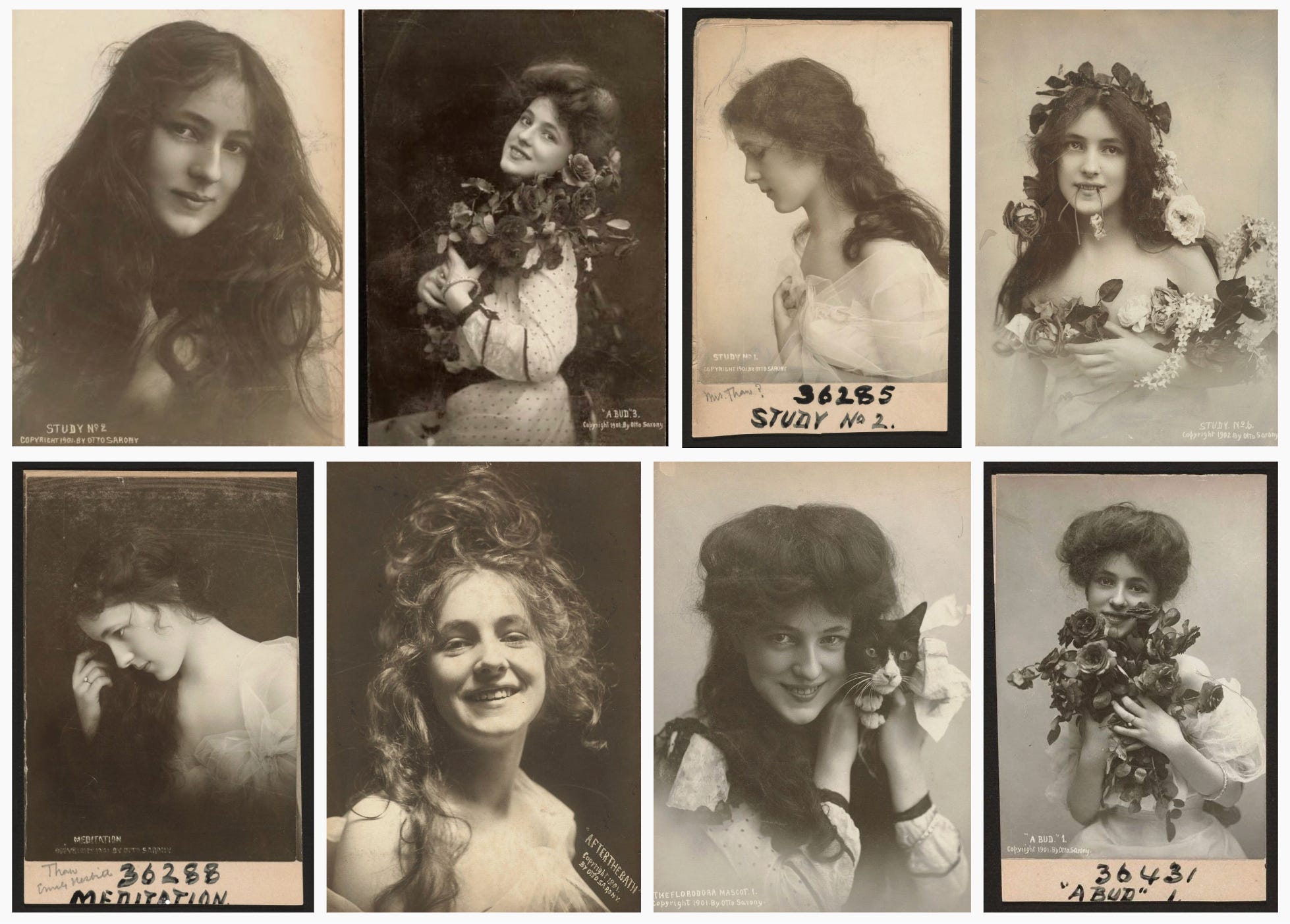
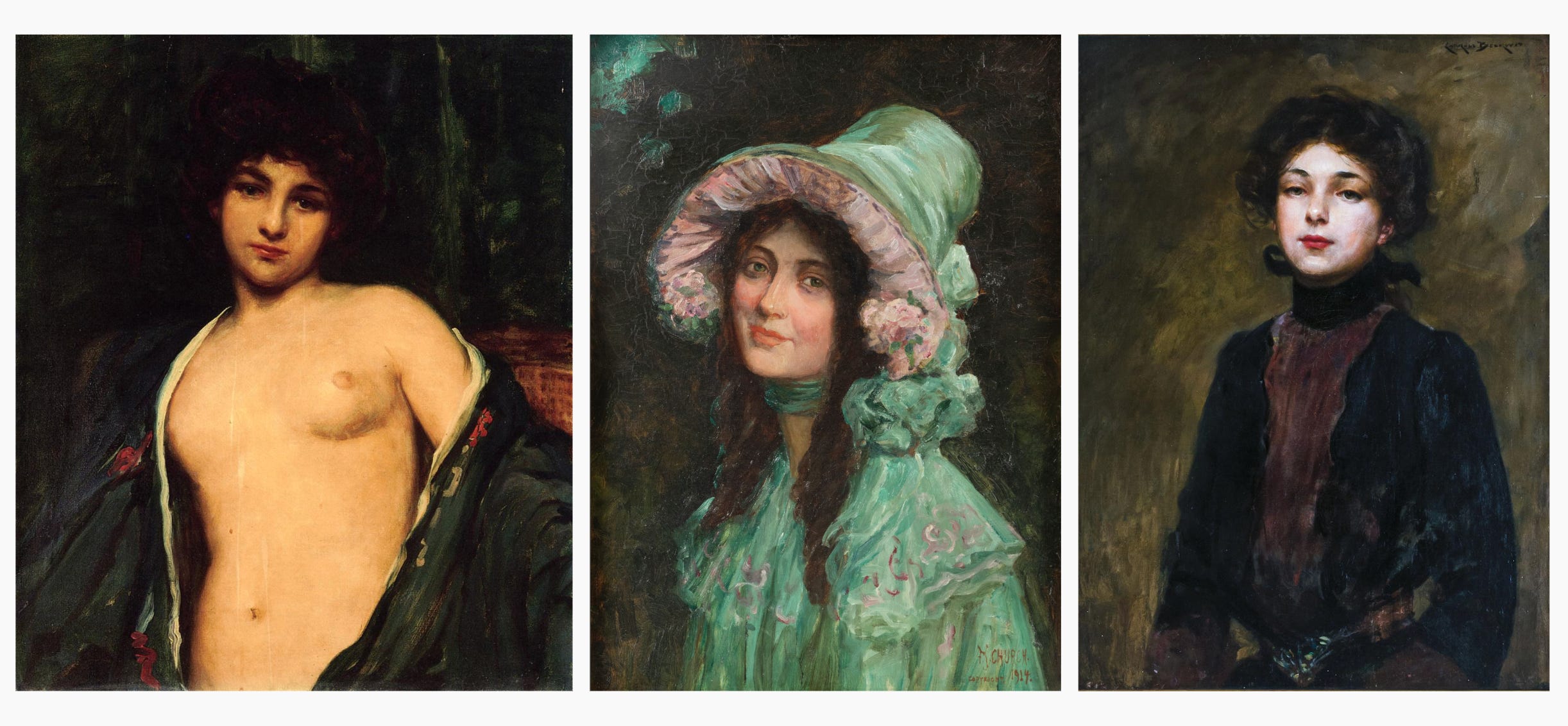
The Nesbits moved to New York City in 1900 where Evelyn began regularly modeling for painter James Carroll Beckwith and posing for life drawing classes at the Arts Students League. She frequented the studios of photographers Rudolph Eickemeyer and Otto Sarony and in 1901 posed for illustrator Charles Dana Gibson, solidifying herself as a bonifide “Gibson Girl” and vision of ideal feminine beauty.
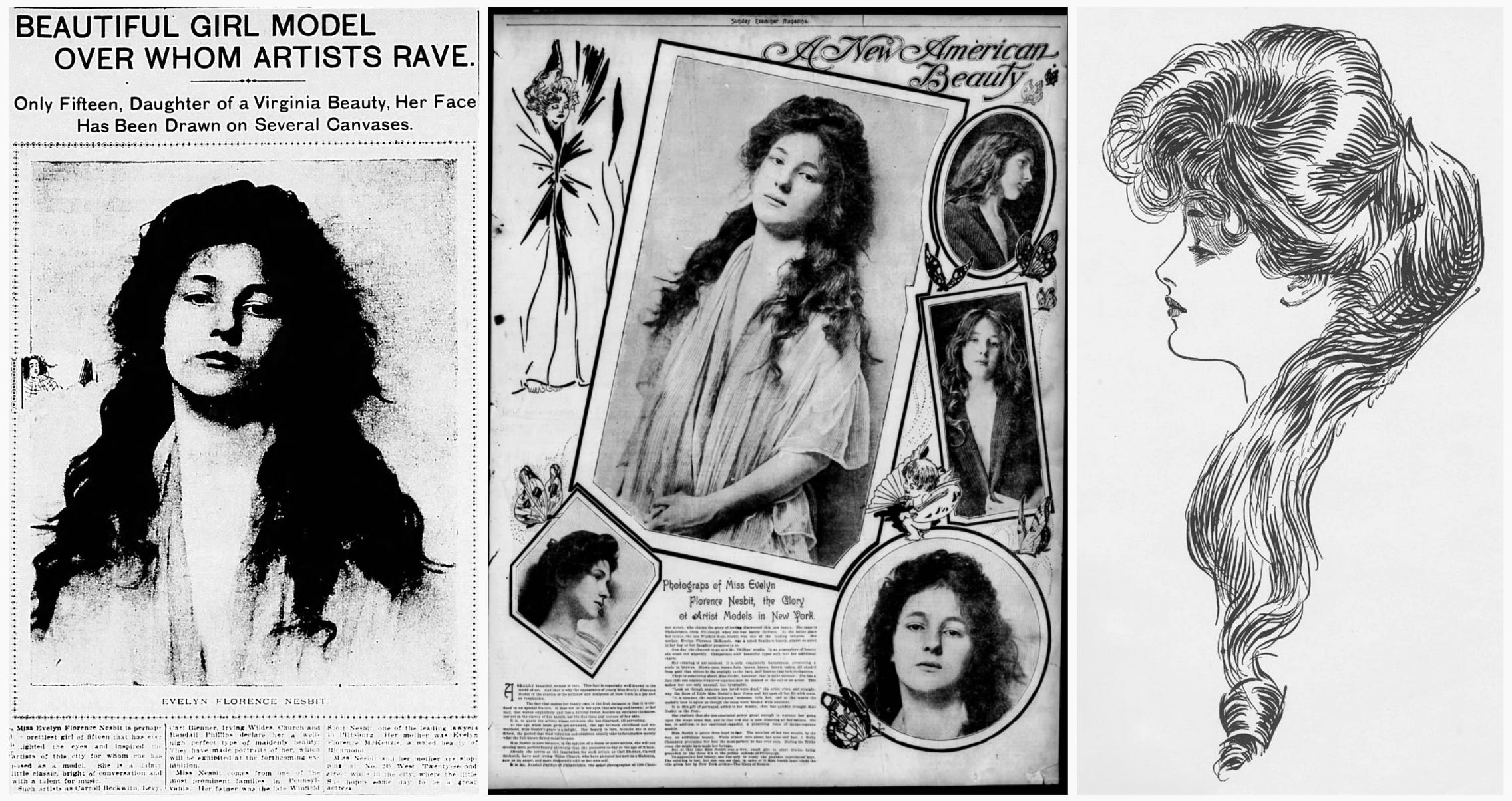
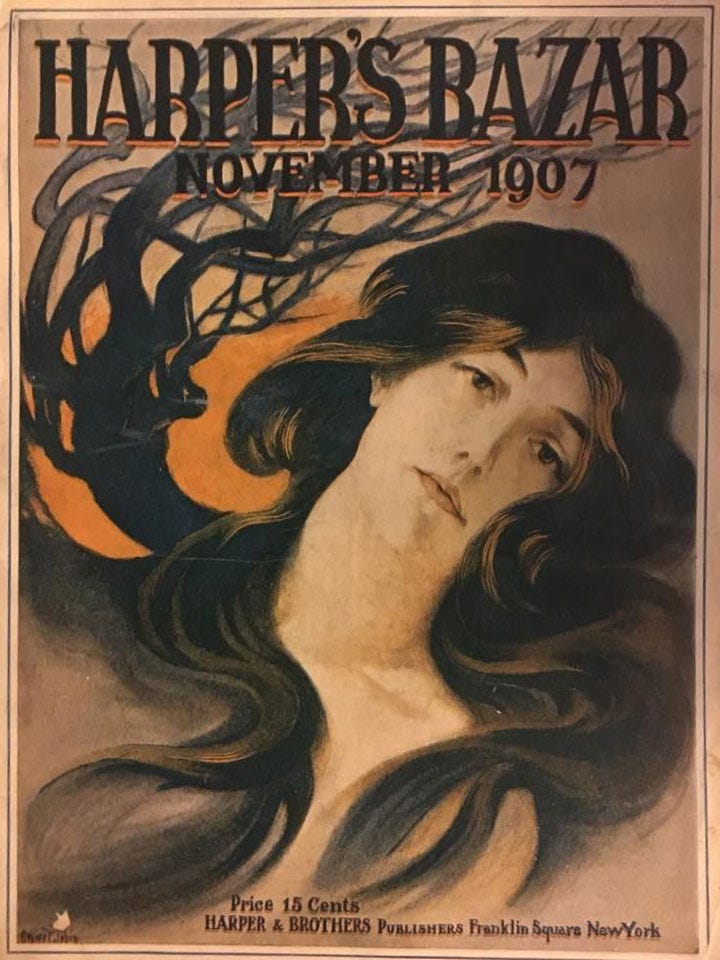
Evelyn’s success soon extended beyond the artists studio, modeling for magazine covers, company calendars and countless other promotional advertisements (like my mirror!) And it wasn’t long before she was approached by producers and made her Broadway debut as a chorus girl in Floradora at the Casino Theater.
As a “Floradora girl” 16 year old Evelyn was introduced to the entirely new world of New York City elite. At that time the stage acted as a sort of incubator for young, beautiful faces, new to the city. And after each show the “Who’s Who” of NY would go back stage to meet the performers (think how Fanny Brice met and Nicki Armstrong in Funny Girl). After attending one of the performances, the prominent and renowned architect Stanford White invited Evelyn to meet with him for lunch. Although hesitant to dine with a married man 30 years her senior, both Evelyn and her mother were reassured of White’s character and passion for helping young talent. Over the next few months Stanford White developed a trusted rapport with Mrs. Nesbit, even paying most of the family’s expenses, all while routinely socializing with Evelyn at dinners and other fashionable gatherings.
White became so close to the family that Mrs. Nesbit asked him to keep an eye on teenage Evelyn while visiting friends in Philadelphia. One of the evenings while she was away, White invited her to a dinner party at his home, but when she arrived she found a table was set for only two. Over the meal White steadily refilled Evelyn’s glass of champagne and insisted she finish it even after she noticed a strange taste in the last pour.
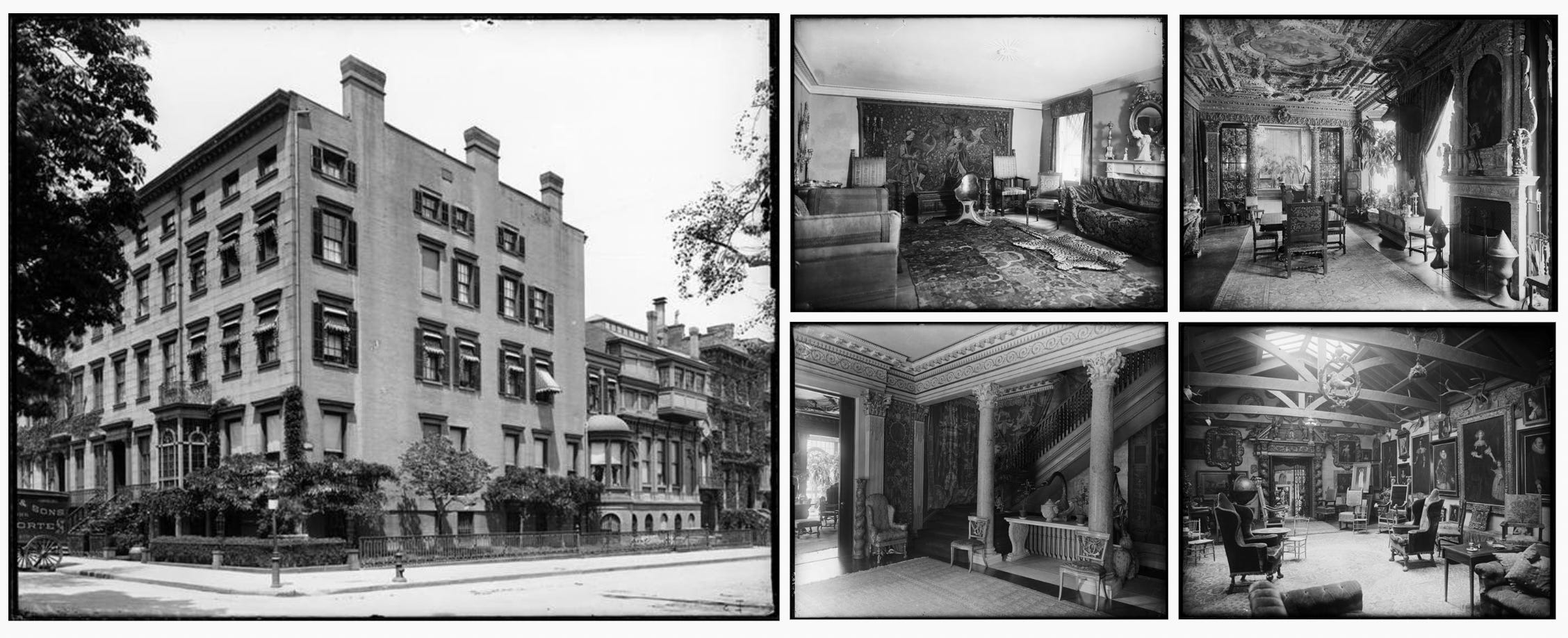
The next morning Evelyn awoke, confused and frightened and in bed with White, both unclothed and with no memory beyond their dinner. White instructed her not to tell anyone of the evening and she left in a daze. Underneath the veil of professional benefactor and paternal stand-in, White had constructed an interpersonal dynamic in which he could manipulate and abuse Evelyn avoiding suspicion.
Evelyn kept the assault to herself, fearing that her livelihood and the livelihood of her family would be destroyed by the powerful Stanford White. Instead, she focused her energy on to her leading role in the musical The Wild Rose (1902). Around this time she began seeing fellow actor John Barrymore (eventual grandfather of Drew Barrymore) to which White took notice. Worried the relationship was becoming serious, White worked with Mrs. Nesbit to separate Evelyn and John. He arranged for her to attend an all girls boarding school in New Jersey, but not before she caught the eye of another wealthy (and deeply disturbed) man about New York— Harry K. Thaw.
A note on these men — Stanford White was well-known in New York society as a member of Beaux Art architecture firm McKim, Mead & White. He designed Madison Square Garden (1890), the Washington Square Arch (1891) the Villard Houses (1882) ~or the New York Palace Hotel for you Gossip Girl fans~ and countless other palatial mansions around the turn of the century. He was wealthy, respected and well connected. Henry Thaw’s access to Manhattan’s elite, on the other hand, came from his railroad tycoon father whose seemingly endless amount of money afforded him a seat at every table.
For over a year Thaw had admired Evelyn from a distance, eventually introducing himself and persistently pursuing her, despite her apparent disinterest. He seized an opportunity to swoop into Evelyn’s life when he heard her appendix had ruptured while at school and arranged for her to be seen by the best doctors. While she was recuperating, he planned and financed a trip to Europe for Evelyn and her mother, joining them a few days later.
Initially Thaw was on his best behavior and quickly asked Evelyn to marry him. She politely declined to which he persistently demanded an explanation. Eventually worn down by his interrogation Evelyn disclosed details about White’s assault on her and how she was no longer a virgin. Thaw was surprisingly sympathetic and assured Evelyn of her innocence in the abuse, bring the two closer together. But his innate sadistic and violent nature lurked just below the surface.
Mrs. Nesbit returned to America, leaving Evelyn and Thaw to travel alone. While in a remote part of Germany, Thaw physically and sexually assaulted Evelyn. Shocked and bewildered Evelyn managed to travel back to the United States alone.
Upon her return to New York, Evelyn learned more about Thaws past, including his drug use, misconduct and long-term hatred of Stanford White. It was around this time that White forced his way back into Evelyn’s life and demanded she meet with his lawyers to construct a suit against Thaw for physical and sexual abuse of a minor. When Thaw returned to New York, Evelyn went to great lengths to avoid him but he hired a private investigator to find her. At just 17 years old she was distressed, anxious and all alone, her mother having remarried and moved back to Pennsylvania.
Thaw’s persistent efforts paid off again and shockingly, on her 18th birthday, Evelyn Nesbit and Henry Thaw were married. They moved to his family’s mansion in Pittsburg where Thaw become increasingly obsessed and paranoid about Stanford White. While the physical abuse stopped, Thaw regularly demanded Evelyn to retell the story of White’s assault, forcing her to relive the trauma over and over again.
On June 25, 1906, Thaw surprised Evelyn with tickets for the opening night of the musical Mam’zalle Champagne at the rooftop theater of Madison Square Garden. Just as the performance was ending, White sat at his reserved table, Thaw took notice and began to approach. As the final song in the performance played on, Thaw pulled out a concealed pistol and shot White three times in the head. Standing over his dead body Thaw reportedly yelled “I did it because he ruined my wife.”
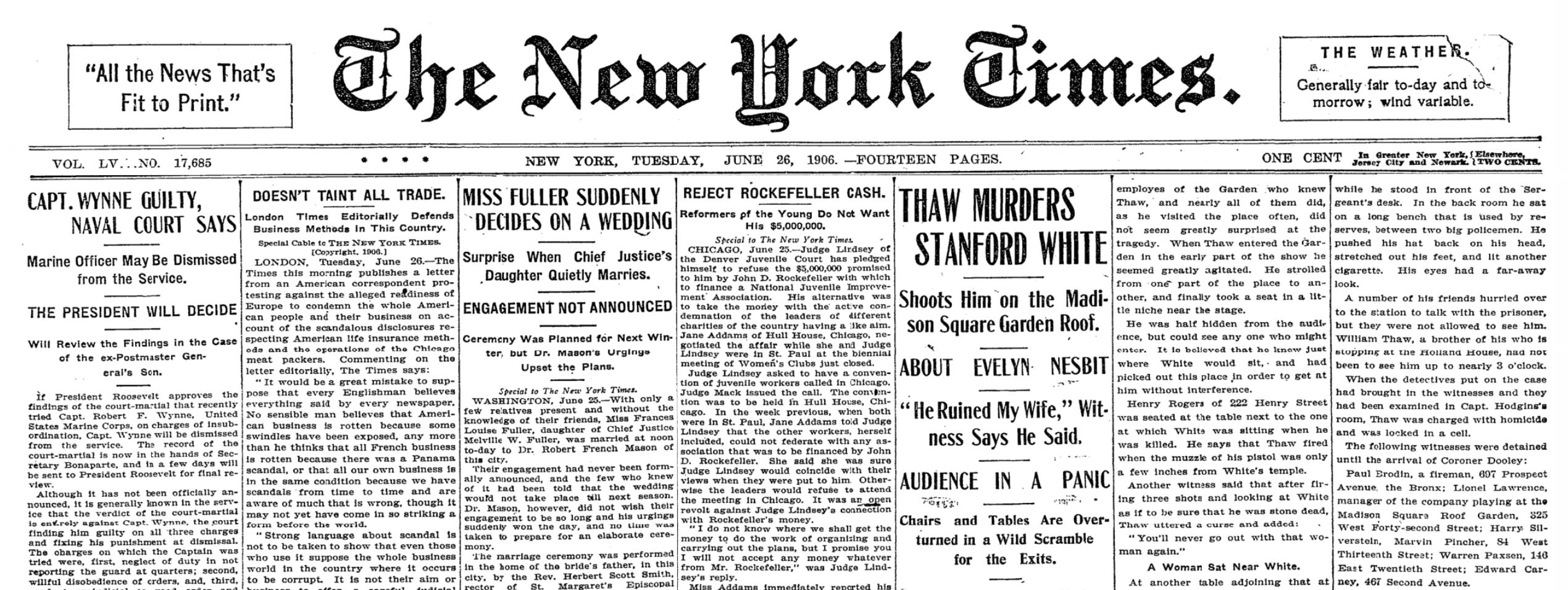
With hundreds of witnesses looking on, Henry Thaw was arrested and taken to Jefferson Market Courthouse in Greenwich Village and then transferred to the Tombs Prison on White Street. The case was widely covered in newspapers across the country and termed “The Trial of the Century”, with Evelyn frequently singled out as the cause of the murder.
The unthinkable trauma that Evelyn had endured years ago and kept to herself had become public fodder when she was called upon as a key witness, not once but twice. Stripped of her privacy, dignity and independence Evelyn was wholly dependent on the Thaw family for financial support.
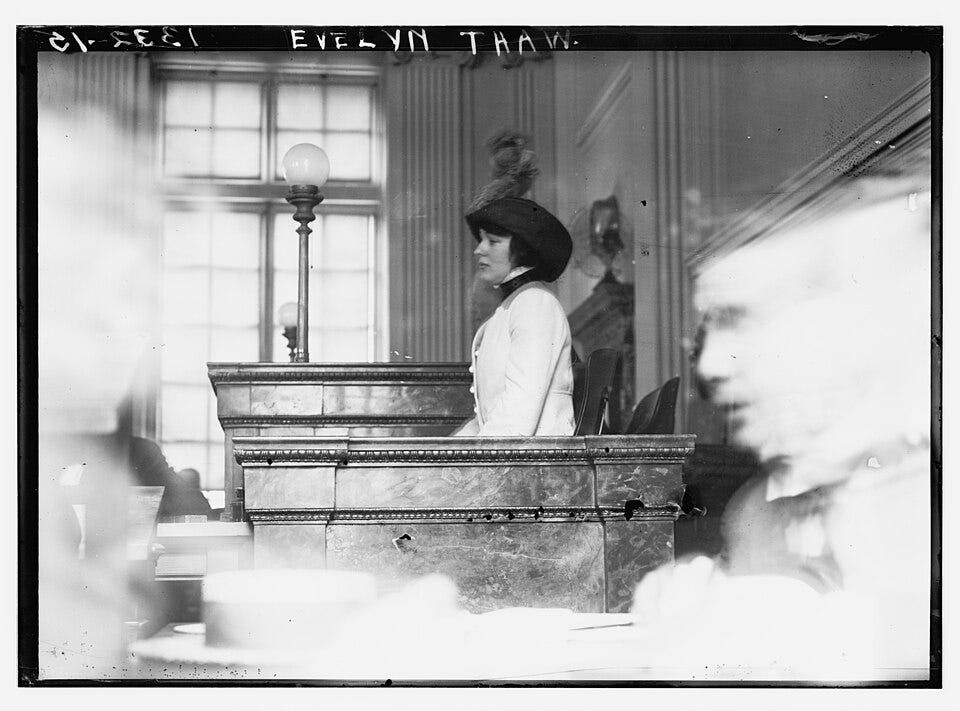
The initial trial resulted in a deadloock with seven jurors finding Thaw guilty of murder and five jurors finding him not guilty by reasons of insanity. A retrial was held and after 20 hours of deliberation, Harry Thaw was acquitted on grounds of insanity and sentenced to the Matteawan State Hospital for the Criminally Insane.
Evelyn continued to visit Thaw while he was incarcerated, becoming pregnant with his son in 1910. Left virtually penniless after the trial, she returned to the stage, performing in vaudeville shows and silent films making just enough to provide for herself and son, Russell.
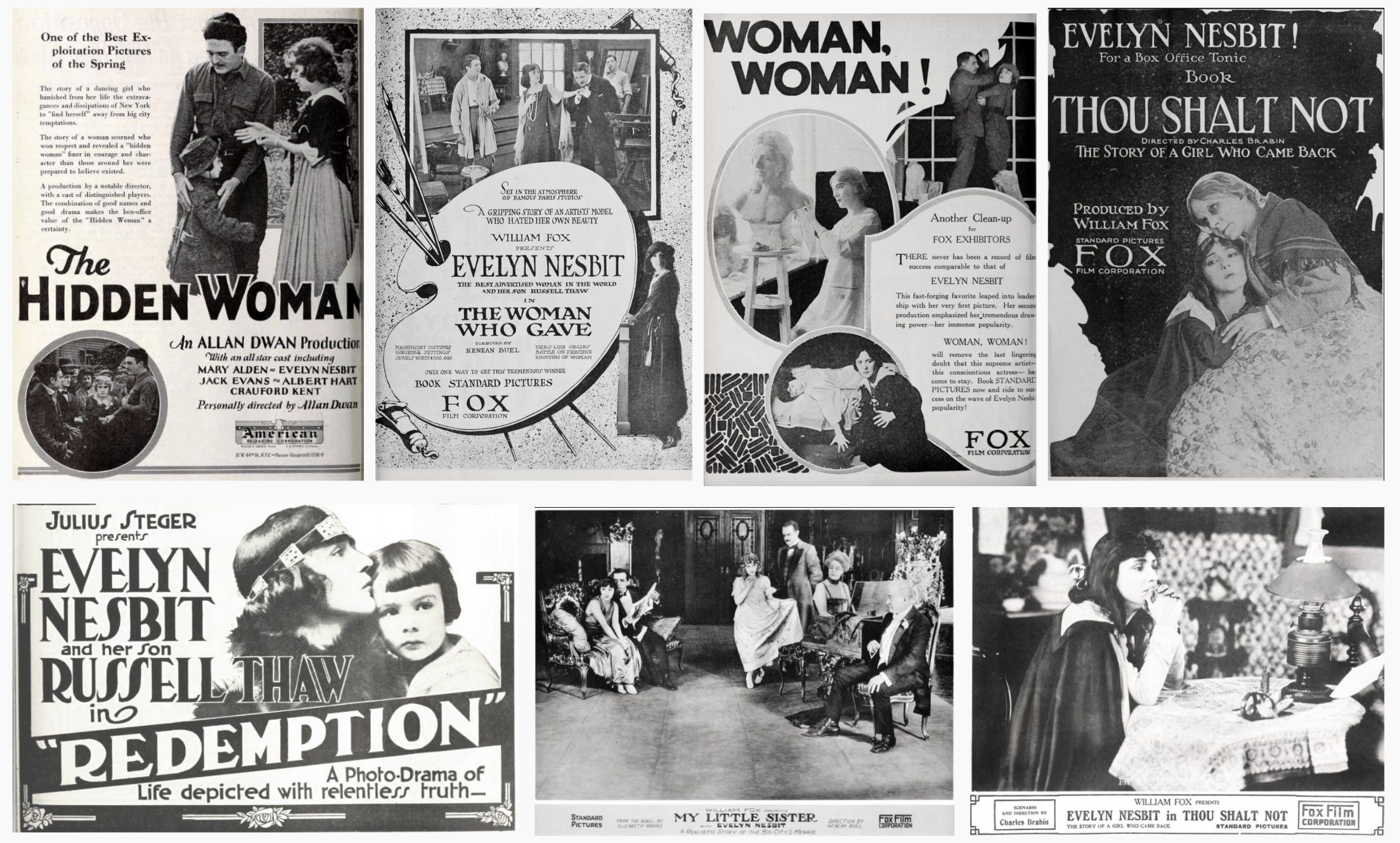
In August of 1913 Henry Thaw successfully escaped Matteawan, fleeing to Canada. He was eventually extradited back to the U.S. and transferred to an institution in Pennsylvania. Evelyn divorced Harry Thaw in 1915 and married her dance partner, Jack Clifford, the following year. Three years later Clifford divorced Evelyn citing his dismay as being recognized primarily as “Mr. Evelyn Nesbit”.
Despite finally escaping the physical and emotional grips of Stanford White and Harry Thaw, Evelyn Nesbit still felt their fingerprints all over her. She attempted numerous entrepreneurial endeavors including a cosmetic line, a tea room and a nightclub in Atlantic City. But none were fruitful and she subsequently struggled with alcohol and drug use disorder, performing in burlesque houses during the 1920s and 30s.
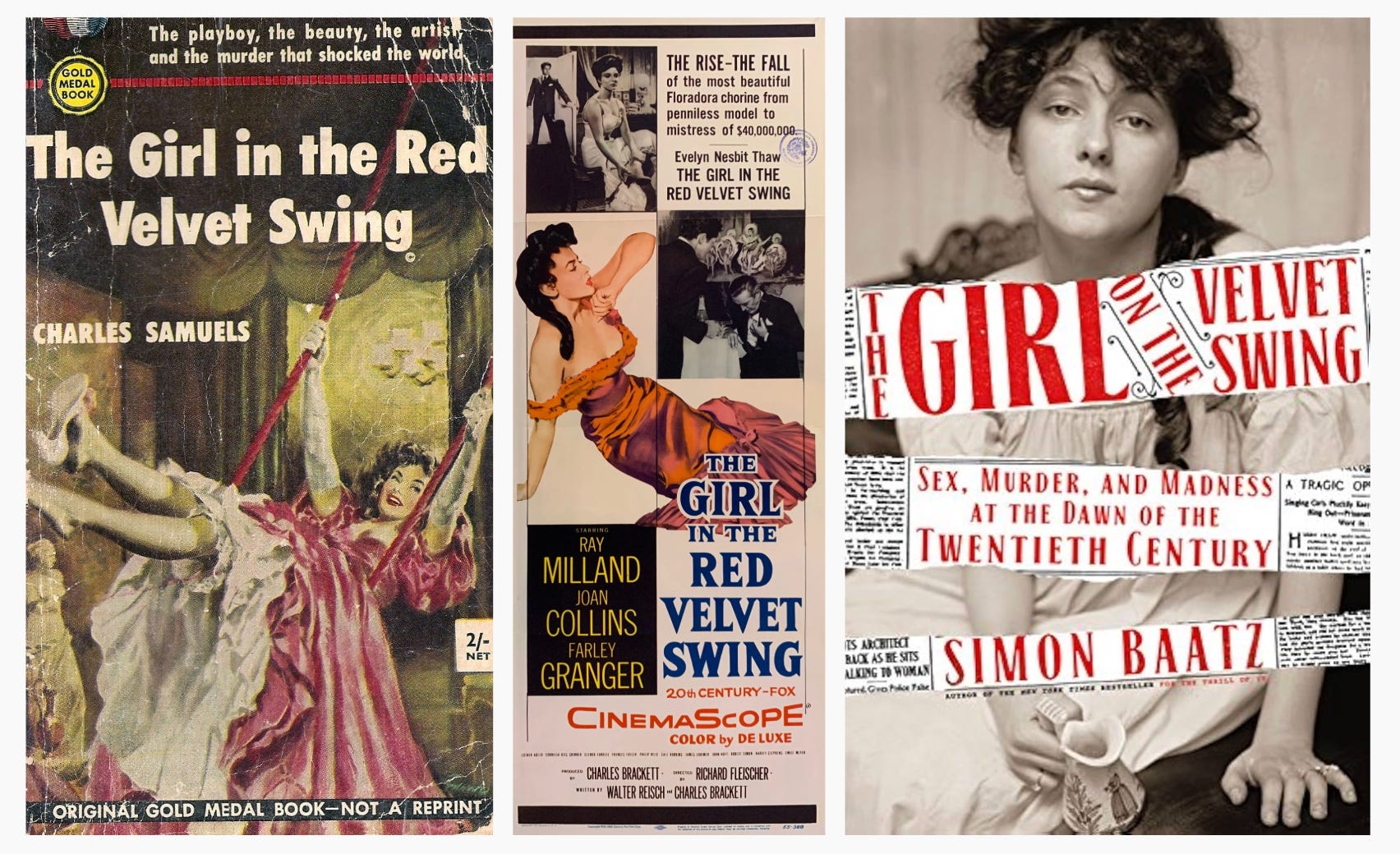
Finally Evelyn moved permanently to California, where her grown son Russell and his family were living. In 1955 the film The Girl in the Red Velvet Swing was released, a fictionalized retelling of Evelyn’s relationships with Stanford White and Harry Thaw. In it, her relationship with Stanford is made to look consensual, rewriting the story for future generations.
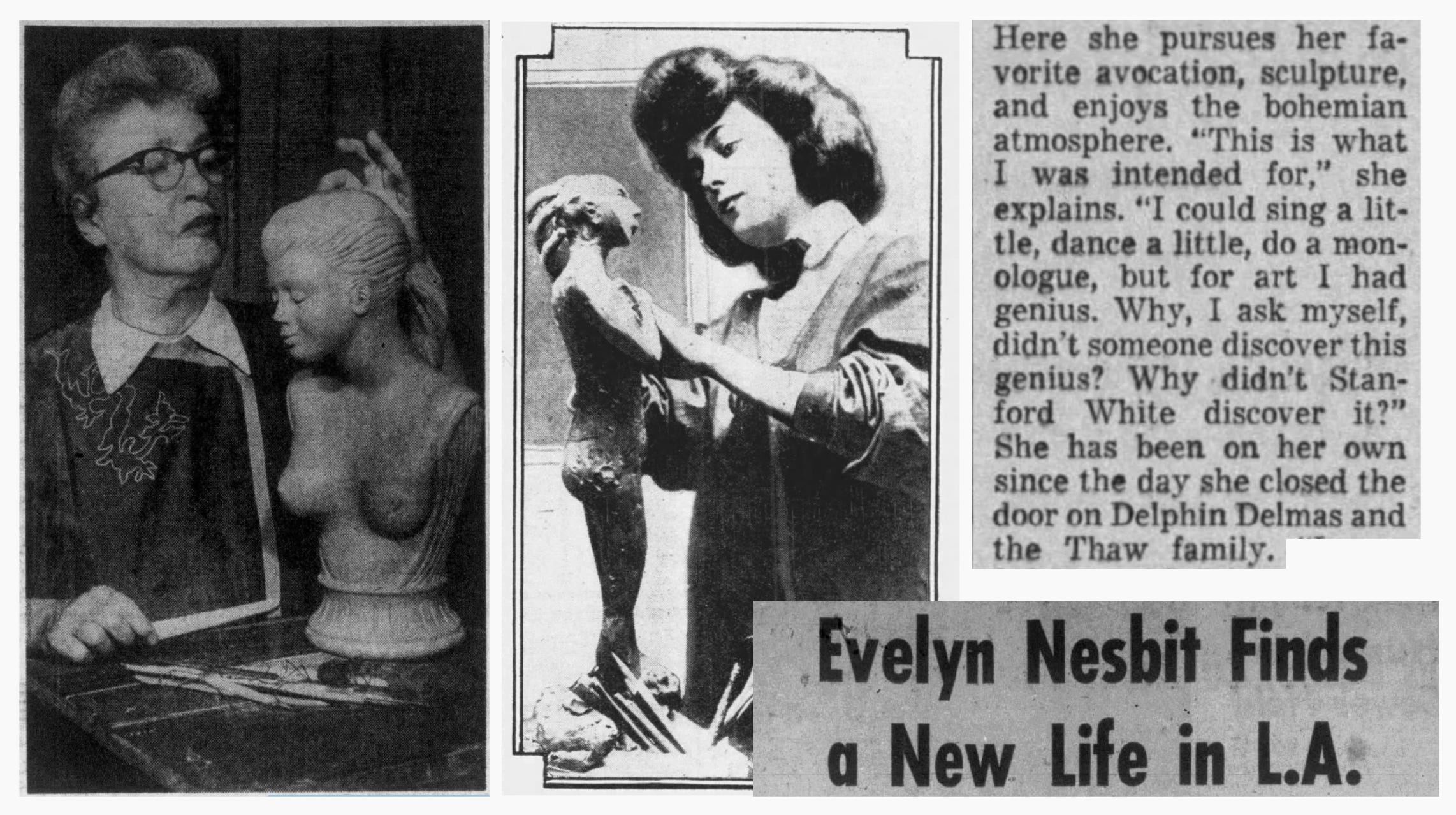
Evelyn spent the last decade of her life as an artist herself, teaching ceramics and sculpture at the Grant Beach School of Arts and Crafts in Los Angeles.
As I write this, I have the compact mirror of Evelyn on my desk. And despite being best known and widely remembered as the object and obsession of two men, that’s not what I see when I look at her. I see a girl, young enough to be playing on a swing, talented enough to have a career as an artist and innocent enough to properly grieve the loss of her father and childhood — and above all, resilient enough to get up each day, despite the horrendous things the world would throw at her, and continue again.
Evelyn Nesbit passed away on January 17, 1967 at the age of 82.
Recommended reading, hearing and seeing:
There are a few books that I recommend for a deeper dive into Evelyn Nesbits life…
The Girl on the Velvet Swing: Sex, Murder, and Madness in the Dawn of the Twentieth Century by Simon Baatz
American Eve: The Birth of the “It” Girl and the Crime of the Century by Paula Uruburu
In 1934 Evelyn published her autobiography Prodigal Days: The Untold Story
I haven’t read this book yet but it’s on my list The Architect of Desire: Beauty and Danger in the Stanford White Family by Suzannah Lessard
You can watch The Girl in the Red Velvet Swing (1955) for free here
PBS created a documentary on trial you can watch - American Experience: Murder of the Century