

Audrey Munson
"What becomes of the artists' models? Where is she now, this model who was so beautiful?"

I’ve been sitting on this story for a while. It’s haunted me ever since I first heard it on a 2016 episode of 99% Invisible and inspired countless hours of mid-night amateur research. A wild and exquisitely unfair tale that sounds more fictional than any other rags-to-riches-to-rags story I’ve ever read (I’ve read many) and it touches on basically all my obsessions - art, architecture, NYC history and (of course) insane asylums… Similar interests? Read on…
By the age of twenty Audrey Munson was called “the most perfectly formed woman”, “the most beautiful in the world” and “America’s Venus”. Her face and figure were the model for hundreds of America’s greatest monuments, over 30 sculptures in The Metropolitan Museum of Art and four silent films. And while the art she helped to create has endured over a century in public spaces and private collections, few know the tale and the tragedy of the very real woman who inspired it all…
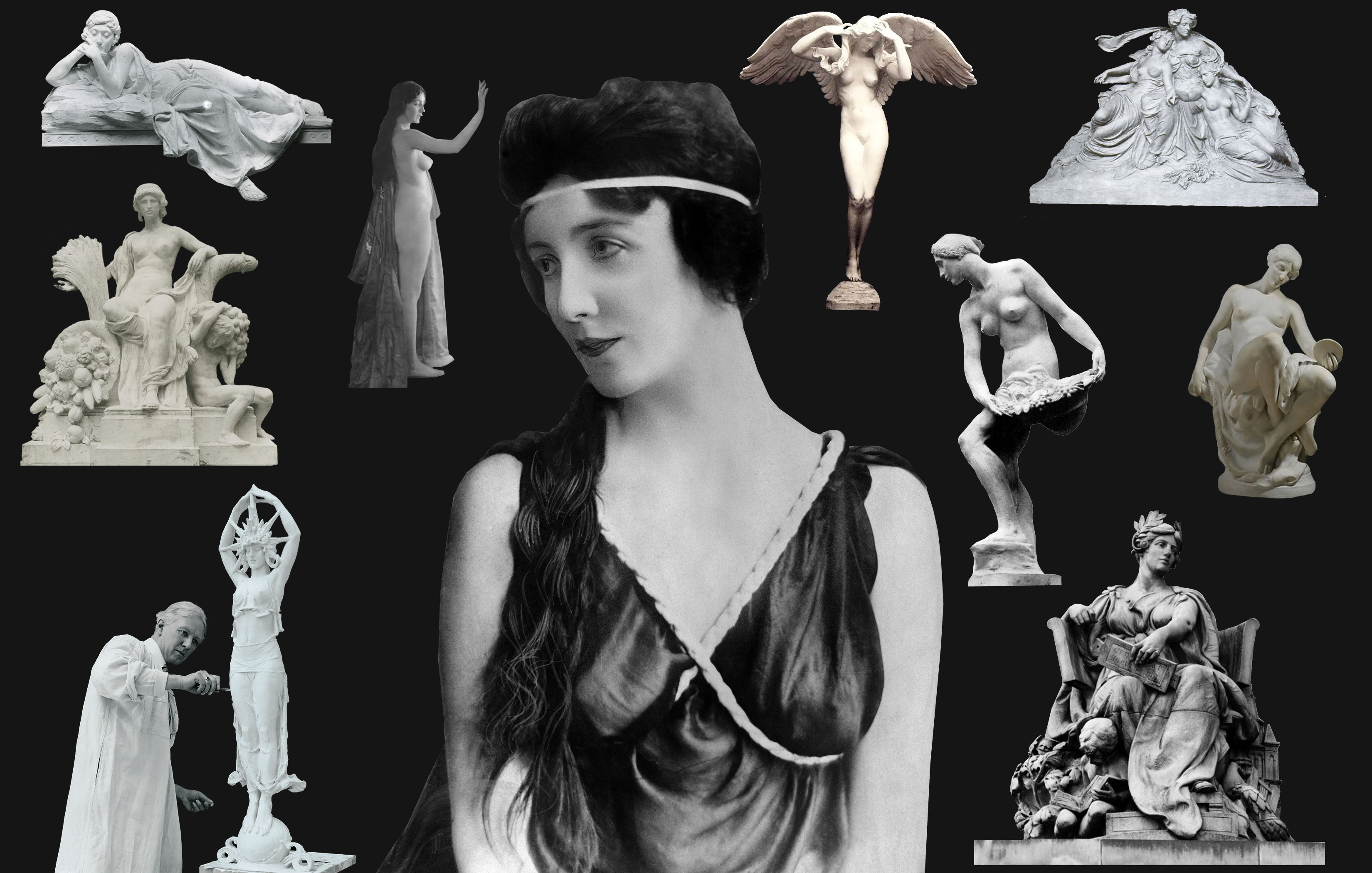
Here’s the connection: Yet another story that starts with the Alcotts… Remember Abigail May Alcott Nieriker? Well, before she became a recognized artist (and known as Amy March in her sister Louisa’s novel Little Women), she taught lessons from her family’s home in Concord and in the the winter of 1868-1869 one of her students was a young Daniel Chester French → Daniel Chester French went on to become one of America’s leading sculptors in the 20th century (the statue of Abraham Lincoln at the Lincoln Memorial in Washington, D.C…yeah, that was him.) → Audrey Munson modeled for several of Daniel Chester French’s sculptures and is considered by many to be the first ever supermodel.
Here’s her story:
Audrey Munson was born on June 8, 1891 in Rochester, NY to Katherine “Kittie” Mahaney and Edward Munson. Her parents divorced when she was 8 years old and Kittie was granted full custody of Audrey. To perfectly set up a life punctuated by an unresolved “Father Complex”, Edward immediately remarried and started a new family while Audrey and Kittie, left to fend for themselves, moved to Providence, RI (why are so many of our subjects connected to Providence, RI??). There Audrey took singing and dance lessons, and like any ambitious 17 year-old with theatrical dreams and a stage mom, moved to New York City.
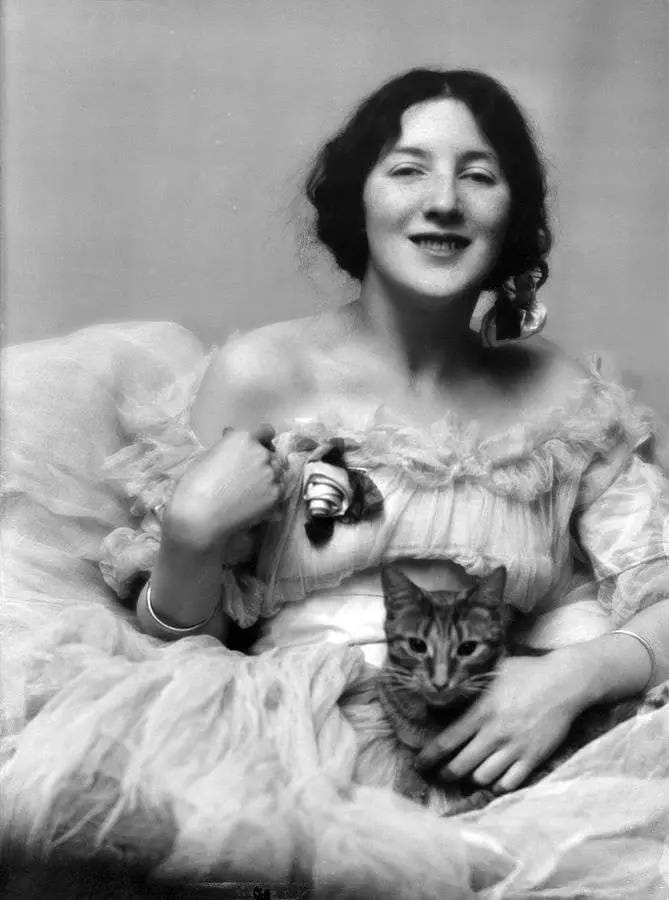
That year Audrey made her Broadway debut in The Boy and the Girl (1909) followed by a few other credits, but her big break didn’t happen on the stage, it happened..… window shopping on 5th Avenue. One afternoon Audrey and Kittie noticed a man following them (don’t love that) who eventually introduced himself as photographer Felix Benedict Herzog. Struck by Audreys perfect proportions and symmetrical face, he asked her to pose for him in his studio, which she (with Kittie as a chaperone, go stage moms!) reluctantly agreed to do. The combination of Audrey’s classical beauty and innate talent quickly made her THEE model for THEE artists working in the Neoclassical and Beaux Arts style, including renowned sculptor Isidore Konti. It was in session with Konti that she first posed “in the all together” (that means nude) for Three Graces (1909), a commission for the Ballroom at the Hotel Astor. Audrey continued to pose “in the all together” for many different works by many different artists but would refer to Konti’s masterpiece as “a souvenir of my mother’s consent”.

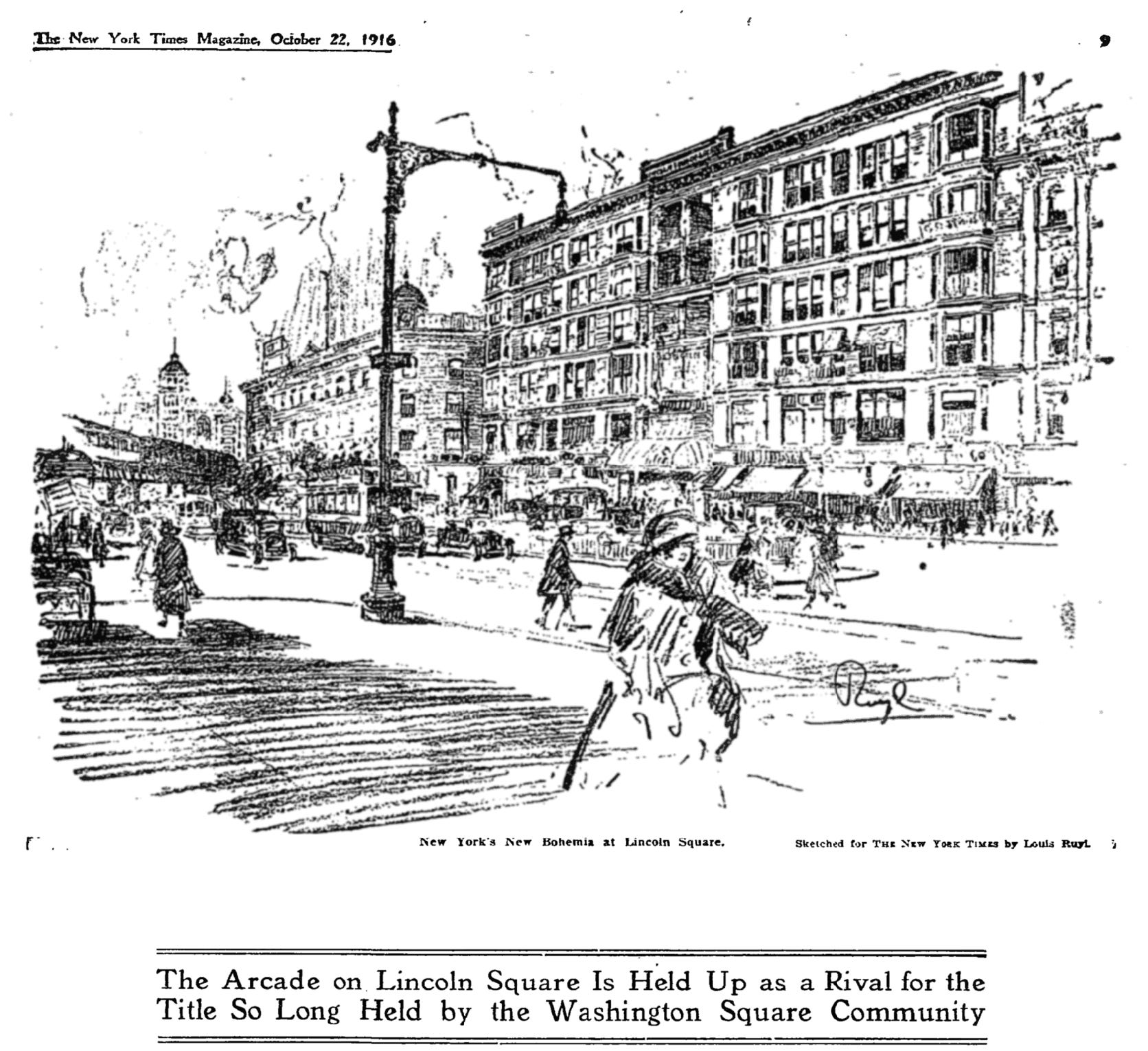
Audrey’s star was rising — she was lovingly called “The Queen of the Artists studios”, “The Venus of Washington Square” and “Miss Manhattan” and was written about in daily newspapers. And in 1915 she posed for more than 3/4 of the sculptures (1,500 individual pieces!!) at the Panama-Pacific International Exhibit. With nearly 19 million visitors, Audrey was officially a national sensation.

New York was waiting for “The Exposition Girl” upon her return with a starring role in The Fashion Show at the Palace Theatre. In this forerunner to the NYFW shows we see today, Audrey, along with twenty other models, stepped out of an enlarged cover of Vogue magazine and walked down the stage dressed in clothing from American designers like Bonwit Teller. A spectacle of fashion and glamour— unsurprisingly the show was a hit! But behind the scenes (literally, in her dressing room) lurked greedy, lustful shadows. The first came in the form of a super powerful theater producer (believed to be Edward Franklin Albee) who while Audrey was changing backstage, approached her from behind and began touching and kissing her neck. She was finally able to get away from him, but as he left he shouted “You will have cause to remember this.” The next day Audrey was fired from the show and her career on Broadway was over. She was never hired for the stage again.
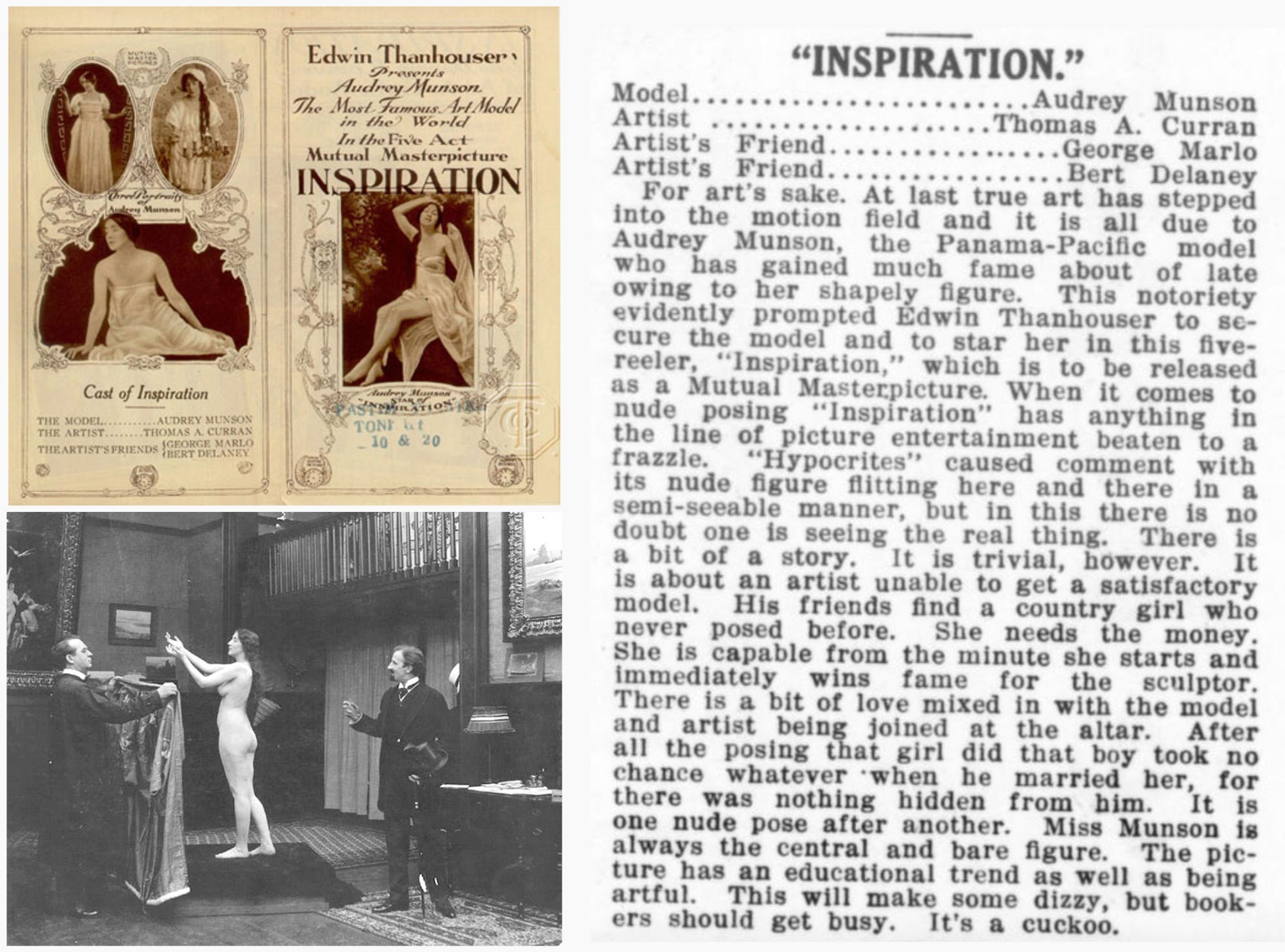
Turning her attention to the burgeoning moving picture industry, Audrey starred in Inspiration (1915), a silent film loosely based off her life as an artist’s model (and the first mainstream American film to feature nudity). It was a success, because yes, even in the early 1900s— sex did sell! The following year she was casted in Purity (1916), again playing an artists model that poses nude, because yes, even in the early 1900s — typecasting prevailed!
In 1918, Audrey arrived to film her third movie, The Girl O’ Dreams, but this film was different… Audrey still played her signature artist’s model but one that’s described as “deranged” with “a childlike mind…that of an innocent child of three”. In a disturbing scene Audrey’s character is sexually assaulted and I find it hard not to imagine the psychological effects filming that would have had on her own unprocessed trauma. The Girl O Dreams was never released, adding to the troubling mystery of what truly happened on that set.
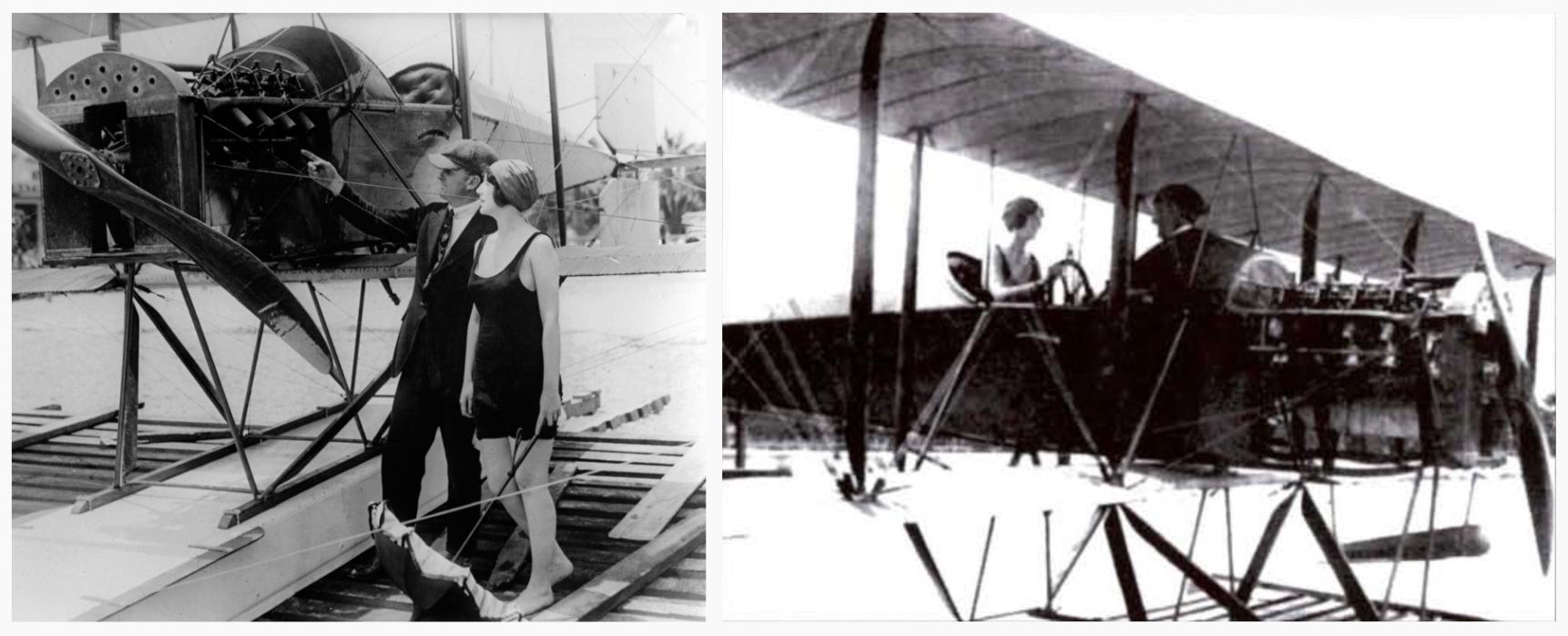
The next part of Audrey’s life reads more like a series of very, very unfortunate events… A tumultuous relationship with “America’s Richest Bachelor”, Hermann Oelrich Jr., who was known for his violent outbursts and not-known for his closeted homosexuality, left her absolutely heartbroken. She contracted the flu shortly after she and Kittie moved into a boarding house, and too sick to work, their life savings began to quickly dwindle. And then to top it all off, her name becomes embroiled in one of the bloodiest, most notorious murder trials of the time…
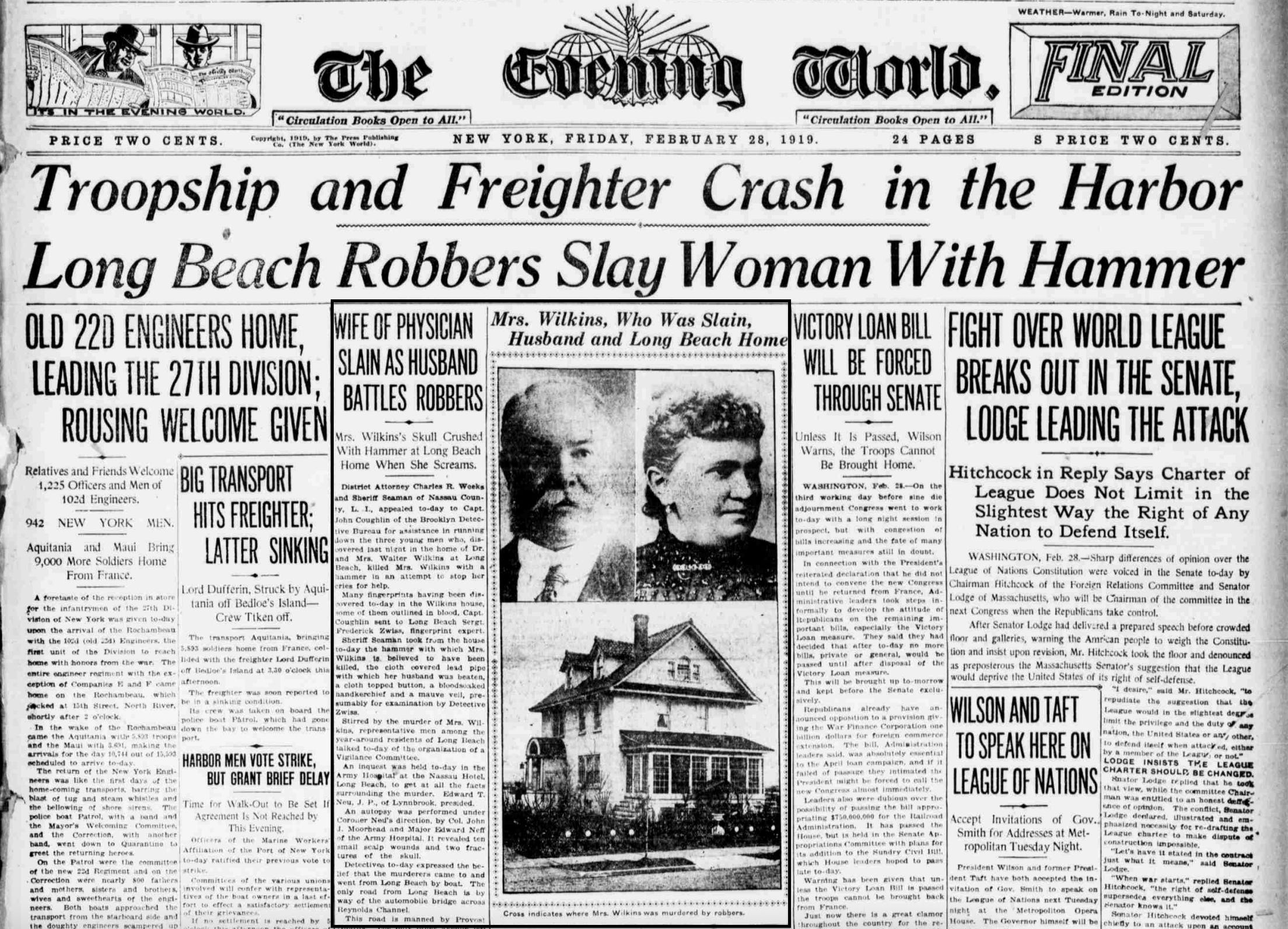
Julia Wilkin’s owned and operated the boarding house (164 West 65th Street) where Audrey and Kittie had lived. A few weeks after they moved out of the house, Julia was brutally murdered and her husband was identified as the prime suspect (bloody clothes, the murder weapon, etc). And once the connection between Audrey and the boarding house was made, she became a (wanted) star witness, despite no evidence that she was involved in the personal lives of either the murdered or murderer. She submitted a written affidavit and was not made to testify in court. Regardless, a story of America’s most beautiful and lusted-after woman being the motive for a highly publicized murder sealed her fate. She was released from pending film contracts and was unable to find work with any of the artist who once coveted her. She said, “wherever I went I felt cold, curious eyes upon me. I suppose that the whole wretched business had shattered my nerves. But you have no idea the hell on earth that I have endured.”
With no luck finding work in the city, Audrey and Kittie moved upstate. Audrey applied to literally hundreds of low paying jobs (librarian’s apprentice, department store sales person, etc.) but was unable to find any employment. By this time, Audrey began exhibiting alarming signs of paranoia. In a 1919 letter sent to the State Department, she listed names of ex-boyfriends and several theater/motion picture executives she had previously worked with, classifying them as her enemies. With undeniably anti-Semitic undertones she pleaded for them to be investigated, but ultimately the state rejected her claims.
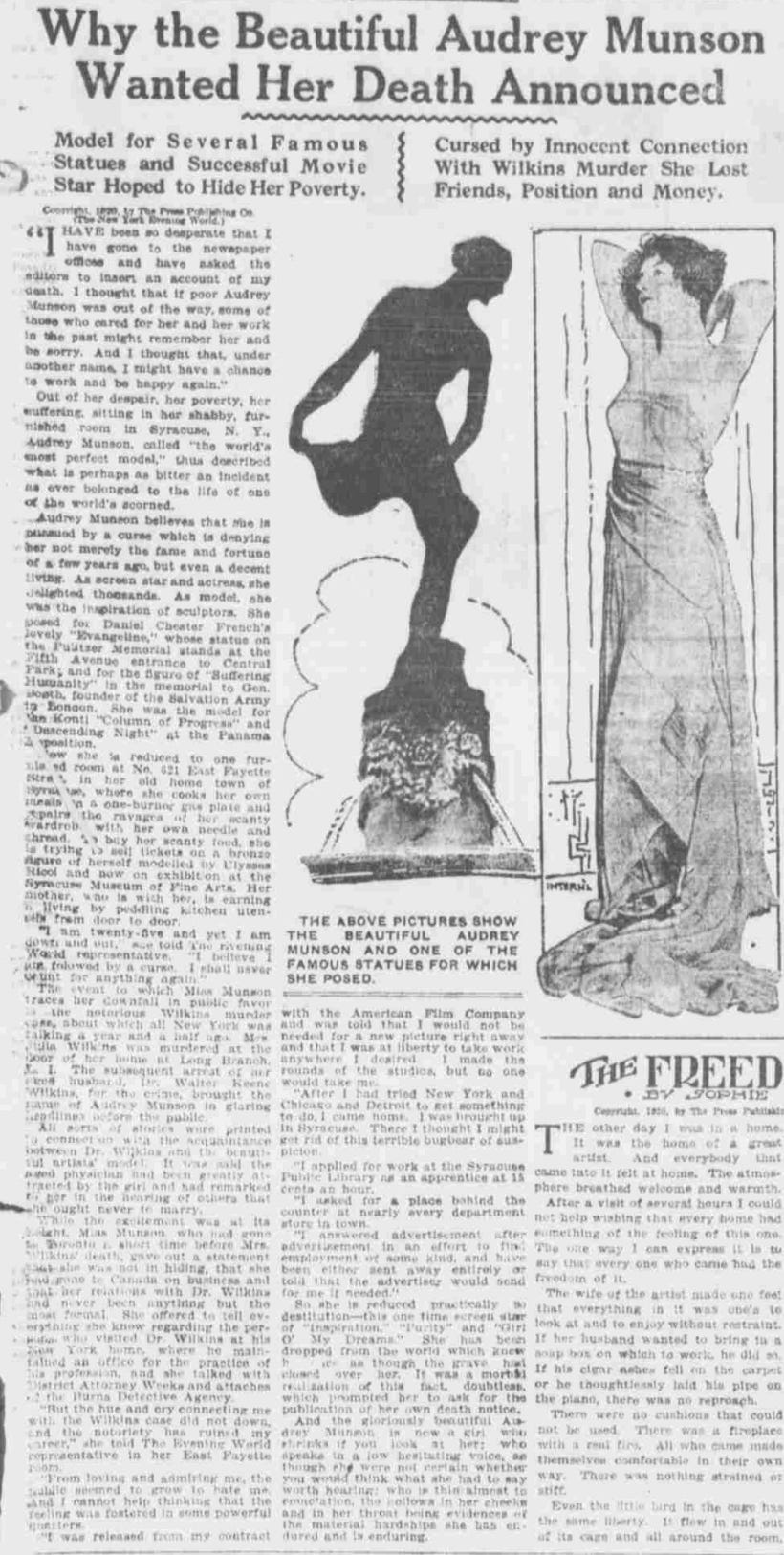
In 1920 she walked into a newspaper office to report her own death in hopes of creating a new life and new identity for herself. However the clerk recognized her and the unusual exchange ending up in the paper instead.
Finally a glimpse of hope came when Audrey was offered a sizable sum for the rights to her life story that would be made into an autobiographical film (yay)… serving as a cautionary tale about the dangers of posing nude (boo). But ultimately another woman was casted as Audrey in what was released as Heedless Moths, another film lost to time.
And because this story has a bit of EVERYTHING, there was also a national dating competition, that had more than a hint of eugenic undertones (yes, really) that (shockingly) was unsuccessful in finding Audrey a husband. She supposedly did find love in 1922, at 31 years old, but when a telegram arrived at her home from the groom cancelling the wedding, Audrey took four tablets of mercury bichloride with the hopes of dying. She was treated and recovered at a local hospital.
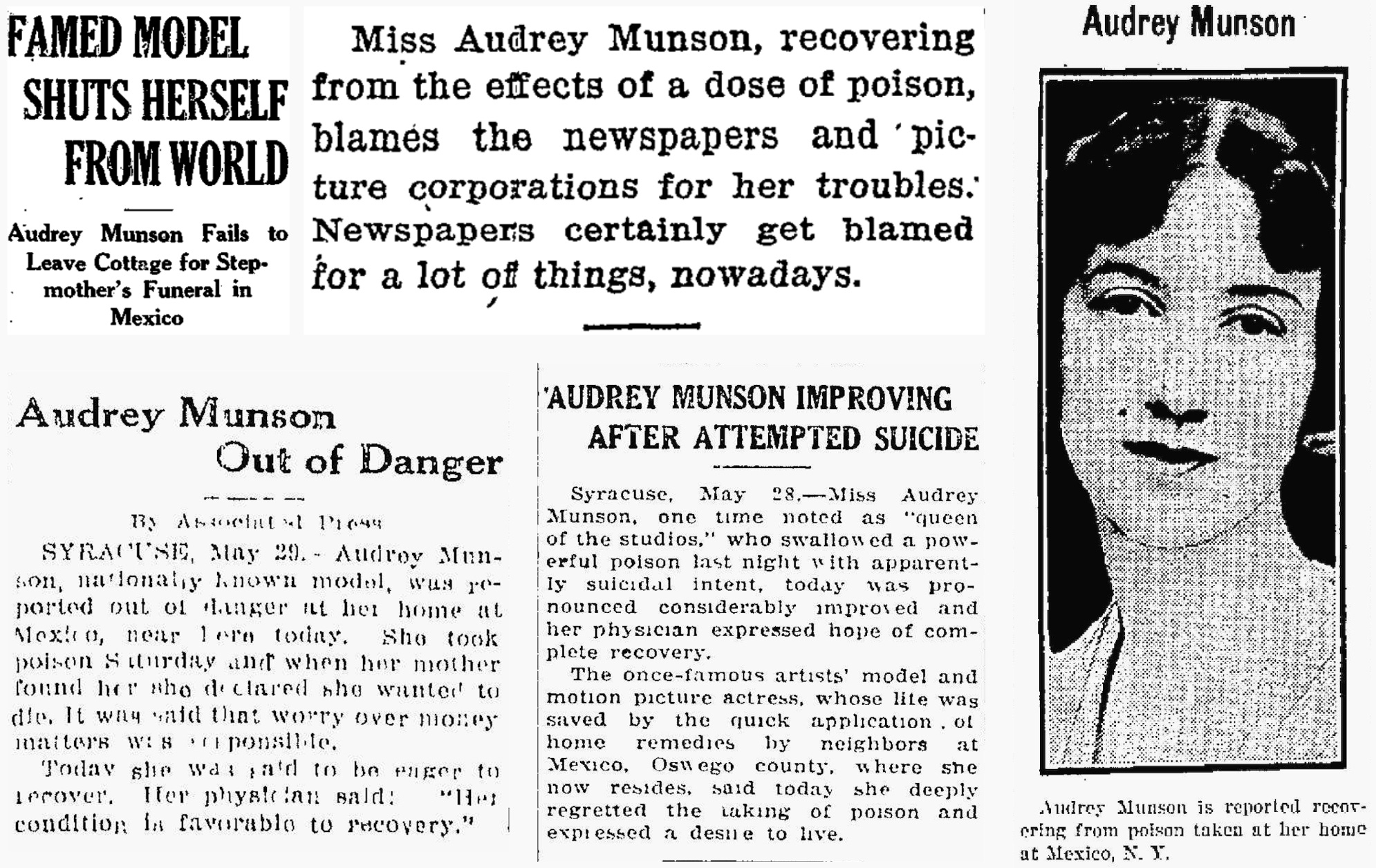
Audrey spent the next nine years as a relative recluse in Mexico, NY, with her mother. Only occasionally would she be seen by neighbors walking her 6 dogs, painting en plein air, or roller skating to the post office. It is reported that as the time passed both Audrey’s paranoia and delusions of grandeur heightened. And on June 8, 1931, Audrey’s 40th birthday, her mother made the excruciating decision to commit her to the Ogdensburg State Hospital for the clinically insane, where she would remain for the next sixty-four years of her life.
The staff that cared for Audrey agreed that in her final decades, she did not suffer from any psychiatric illness. It is rumored that on occasion, at 90-something years old, she would sneak out at night, cross a four lane highway and spend her evenings at a local bar sipping on cocktails and telling unfathomable stories of a beautiful, young model, who had the whole world ahead of her.
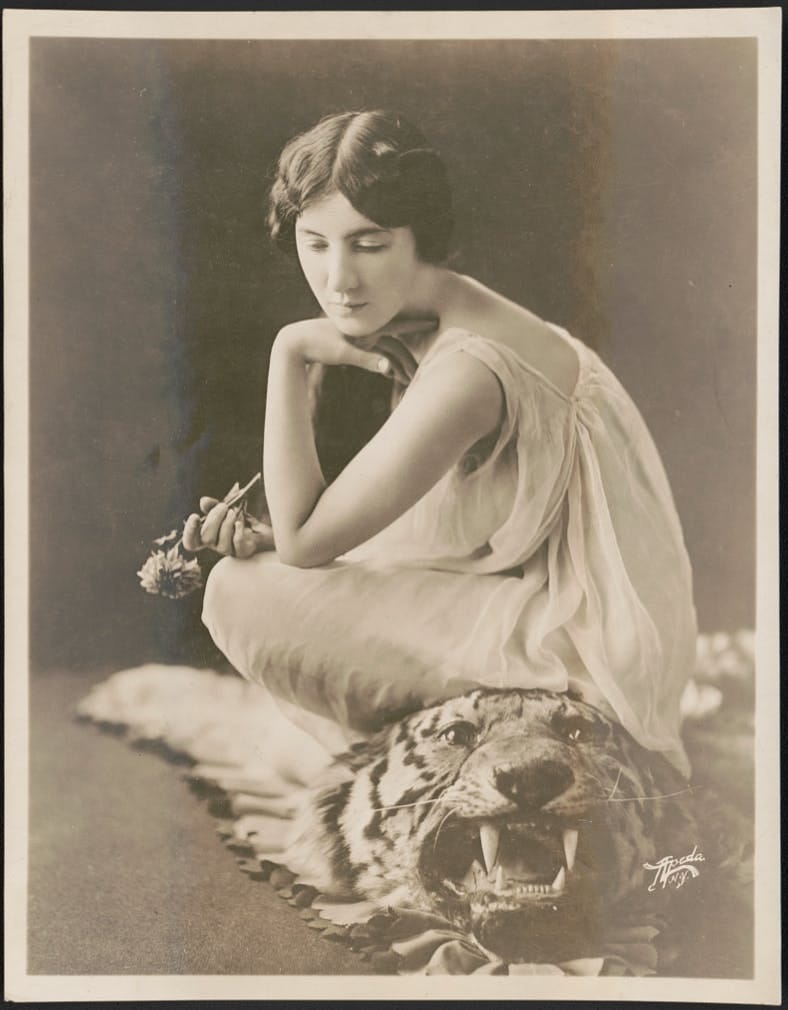
I’m not a trained mental health provider (my mom is!) and it would be irresponsible for me to end this piece be making a statement of whether or not Audrey Munson should have been hospitalized or if the derailment of her life and career can be blamed on some movie producers. But I am a woman who has lived long enough to know how exhausting and confusing it is to try to be good and never mess up. By the time Audrey turned twenty-five, she was the physical embodiment of Grace, Culture, Air, Earth, Peace, Liberty, Abundance, Victory, Memory, Commerce, Fame, Beauty, Duty, Inspiration and Purity. Seems like a tremendous amount of weight on one person, enough to make marble crack.
Recommended reading, hearing and seeing:
My first introduction to Audrey’s story was this episode of 99% Invisible
I highly recommend James Bone’s book The Cures of Beauty: The Scandalous & Tragic Life of Audrey Munson, America’s First Supermodel for a real deep dive
There are countless articles in newspaper archives about Audrey. I compiled some here!
This is an incredible essay called “Rediscovering Audrey” written by a man whose great-aunt had a collection of Audrey Munson’s keepsakes.
this was so interesting!!! i want to learn more about audrey! so glad i came across ur newsletter!
LOOVEE!!!